You are not buying a DTH rig; you are buying an air-and-rock system
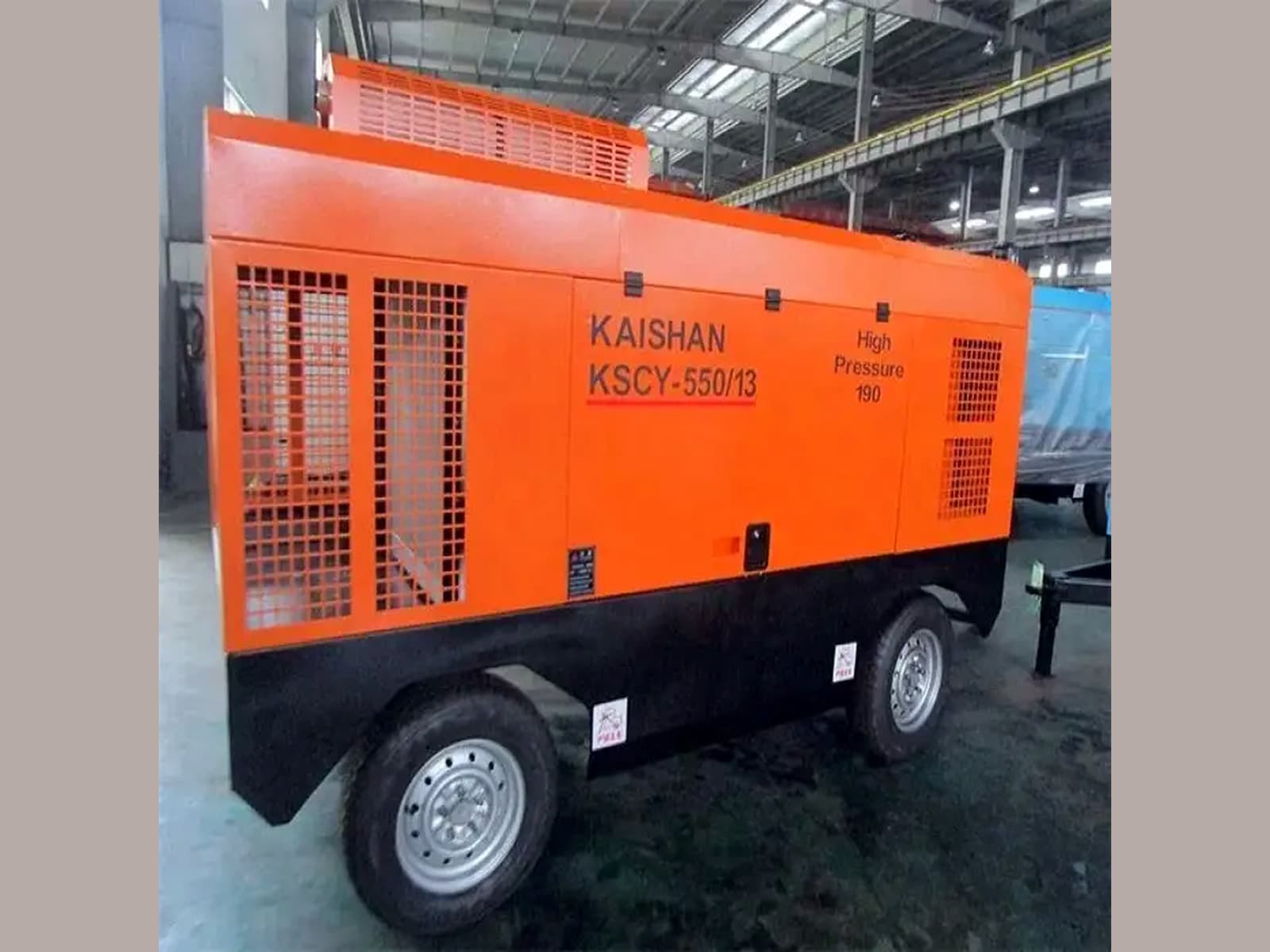
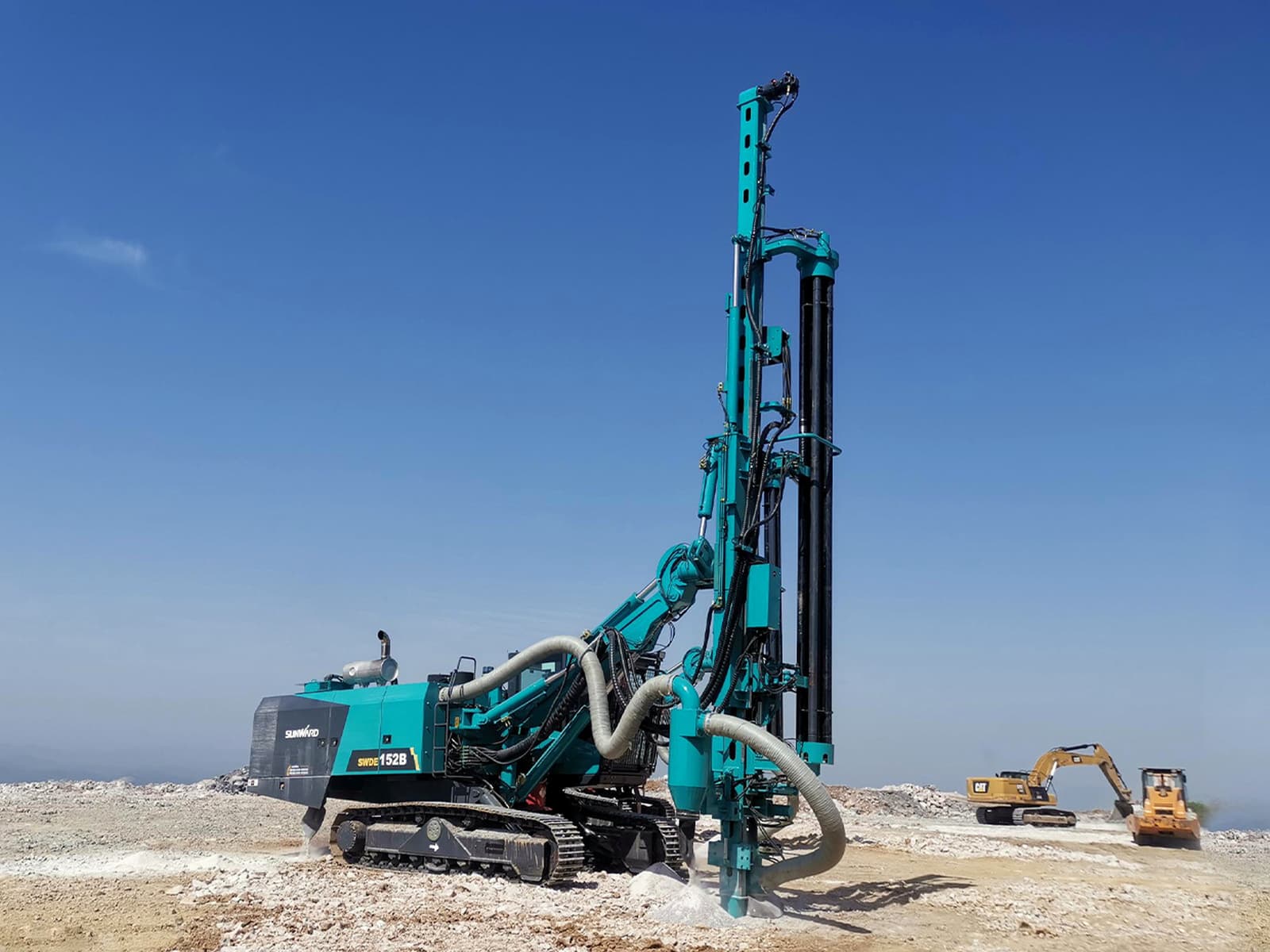
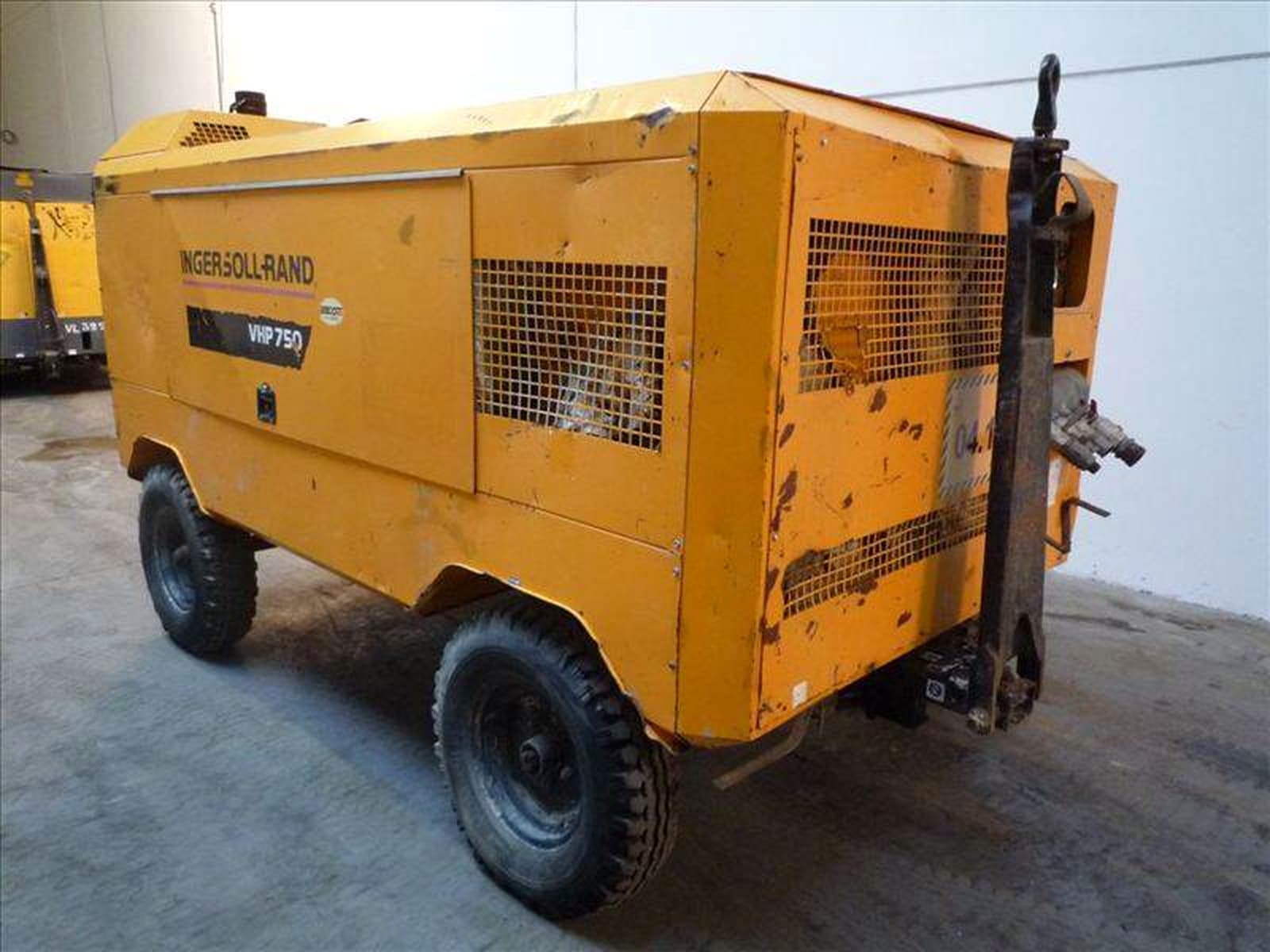
Here is our blunt answer: a DTH rig without the right compressor and hammer is just an expensive crawler carrying drill steel. The badge may be Jinke, Zhigao, Kaishan, Atlas Copco, Sunward or another name you know. None of them can rescue a mismatched air supply, hammer, rod and hole requirement.
We see buyers begin with 'How much is a used T35?' or 'What is the price of a Zhigao 452H?' That is natural; you need a budget. But first tell us the rock, target hole diameter and depth, rod size, site altitude, bench access and expected daily work. Then we can decide whether an integrated rig or a separated rig-and-compressor package is sensible. A low asking price for half a system is not a low project cost.
The market material makes this plain. Sellers advertise DTH machines for quarry blasting, road cuts, slope anchoring and photovoltaic foundations, sometimes with one machine claimed to cover several jobs. We treat that as a lead. We still make the exact unit prove its hole range, rod arrangement, air package and operation in rock close to yours. We want it drilling, not posing beside a compressor with no hose connected.
Start with the rock and hole, then work backward to air
Rock hardness and fracture condition affect how the rig behaves, but the bore plan keeps the discussion practical. Give us your normal hole diameter, maximum diameter, depth, angle and pattern. Tell us whether this is production blasting, anchors, quarry work or foundations. The rig has to position and feed the string; the hammer and bit have to make the hole; the compressor has to supply the pressure and volume that the selected hammer and diameter demand.
One Jinke JK593 rental listing claimed a 90-300 mm hole range for hard-rock work across photovoltaic, quarry, road-blasting and anchoring projects. Another integrated-rig promotion claimed 90-127 mm holes with a 162 kW engine. A Jieya B6A post claimed 90-140 mm and 194 kW. These are creator claims tied to advertised configurations, not a comparison table we blindly trust. A 90 mm hole and a 300 mm hole do not ask the same thing from the air system, and the seller must show what was actually fitted.
Altitude and heat also matter to the conversation because your site is not the seller's yard. We do not make up a correction factor from a short video. We send the site conditions and requested hammer to the supplier, ask for the compressor and rig specifications in writing, and require an operating demonstration. If the seller cannot explain which hammer the quoted compressor supports, the package is not ready for export.
Integrated and separated rigs solve different headaches
An integrated DTH rig carries the compressor, which can simplify mobilisation and remove the daily business of pairing two machines. A market promotion for an integrated unit made exactly that case: fewer separate moves, crawler travel and an onboard compressor. That can be valuable on repeated bench work. It can also concentrate your engine, compressor and drilling downtime in one machine, so service access and parts support deserve more attention, not less.
A separated rig lets the compressor serve more than one task and may be easier to match or replace locally. But the hose, air losses, transport plan and compatibility become your responsibility. We compare the total working set: rig, compressor, hammer, rods, bits, hose, lubricator, dust-control arrangement and any rod carousel. If the listing includes only the crawler, we label it that way. We do not let a photograph of nearby tools quietly become part of the sale.
One field comment under a 100-hour Jinke 595 listing asked the right question: 'Does it come with its own compressor?' That question should be answered in the first written quote. The seller called the rig nearly new and said it had been reserved quickly. Fine. We still verify the hour display against wear, identify whether the compressor is integrated, and write every included component down. Excitement is not scope control.
Low hours, fresh paint and a clean cab are clues, not proof
Based on real second-hand market material, a Jinke 595 was advertised at 100 hours; an Atlas T35 video showed roughly 1,100 hours on the display; and two Zhigao 452H posts described machines in the 200-plus-hour area. The sellers highlighted clean paint, seats, track plates and engine bays. Those details help us form questions. They do not certify the meter or the machine.
For the Atlas T35, the seller said the rig had just arrived and had not yet been washed. That is a useful moment to inspect because oil, dust and repairs are harder to hide. For a Zhigao 452H, one video described a twin-motor head, a 7+1 rod arrangement and a 17/18 compressor configuration. OCR in source video can be imperfect, so we would not copy those numbers into a purchase order. We ask for readable plates and a live walk-around of the exact rig.
Paint is still the cheapest item. We look at feed rails, chains, rod handling, chuck and clamp wear, power-head play, hoses, track system, dust collector and visible repairs. Then we start cold, warm it fully and drill under load. An already-hot engine at idle can hide starting trouble and tells us nothing about penetration, air delivery or overheating. If a seller says 'inspection-free,' we hear 'please inspect it carefully.'
Our remote test follows the pressure path all the way to the bit
We begin with identity in one continuous current video: full machine, model and serial plates, engine plate and hours. Then the seller opens the engine and compressor areas before starting. We watch the cold start, instruments, smoke, warnings and leaks. After warm-up, we want crawler travel and steering, boom movements, feed and retract, rotation both ways, rod change and dust collection where fitted.
The decisive part is drilling. We record the bit and hammer used, rod size, hole diameter and the rock visible at the test site. We watch whether rotation and feed remain controlled, whether the compressor reaches and holds the working condition shown on its instruments, and whether the system overheats or leaks after sustained operation. A short burst into soft material is not a production test. We would rather receive a longer, less beautiful video that shows the machine settling into real work.
We also ask what has been repaired. 'Recently serviced' must become filters, oils, hoses, compressor work, hammer work or other named items with dates and records. Critical wear parts need a supply plan for your country. If local support is thin, we identify filters, hoses, seals, hammer consumables, bits and likely wear items to ship with the machine. The cheapest failure is the one whose part is already on site.
We quote the system to your site, not a lonely machine in China
Price becomes meaningful only after the system is fixed. One 2018 Atlas D55 listing claimed about 4,000 hours, a Caterpillar C11 rated at 261 kW and a two-stage compressor described as 20 cubic metres at 22 bar. Another 2021 Sunward 138 post claimed 4,000 hours, a 140 kW Cummins engine, an Atlas 666 compressor, a 100-200 mm hole range and a 7+1 rack for 5-metre rods. We cite these as examples of how specific a listing can sound. We still require plates, test evidence and a written inclusion list before comparing money.
The commercial file should state the serial-numbered rig, stated year and hours, compressor and engine identities, hammer, rods, bits, hoses, repairs, spares and test condition. It should also name FOB, CFR or CIF terms, loading and destination ports, packing method, export documents and responsibility for cleaning, port charges, customs and destination delivery. Split payment and a method with recourse are sensible protections for a first deal.
At GLOBMACH, we do not send you a catalogue and ask which colour you like. We translate your rock and bore plan into a rig-compressor-hammer shortlist, inspect the exact used units, press the seller where the evidence is weak and show where your budget goes. If the rig is good but the compressor is wrong, we say so. If the whole set works and the landed scope is clear, you have a machine package. Until then, you only have a listing.