Air is the load, the compressor is the answer
When you look at DTH rig for sale, the drill is only half the story. The hammer needs a constant flow of compressed air at the right pressure, and that air has to come from somewhere. That single decision shapes whether you buy an integrated DTH rig or a separate air compressor drill rig package. The choice affects transport, service, redundancy and cost long after the machine is loaded.
The integrated DTH rig vs separate compressor question is not about which is better in the abstract. It is about your specific job: hole diameter, bench height, access, altitude, and whether the compressor will be idle between drilling campaigns. A quarry drilling setup that works on one bench may fail on another if the air supply is not matched to the hammer.
Integrated pages show a single system boundary
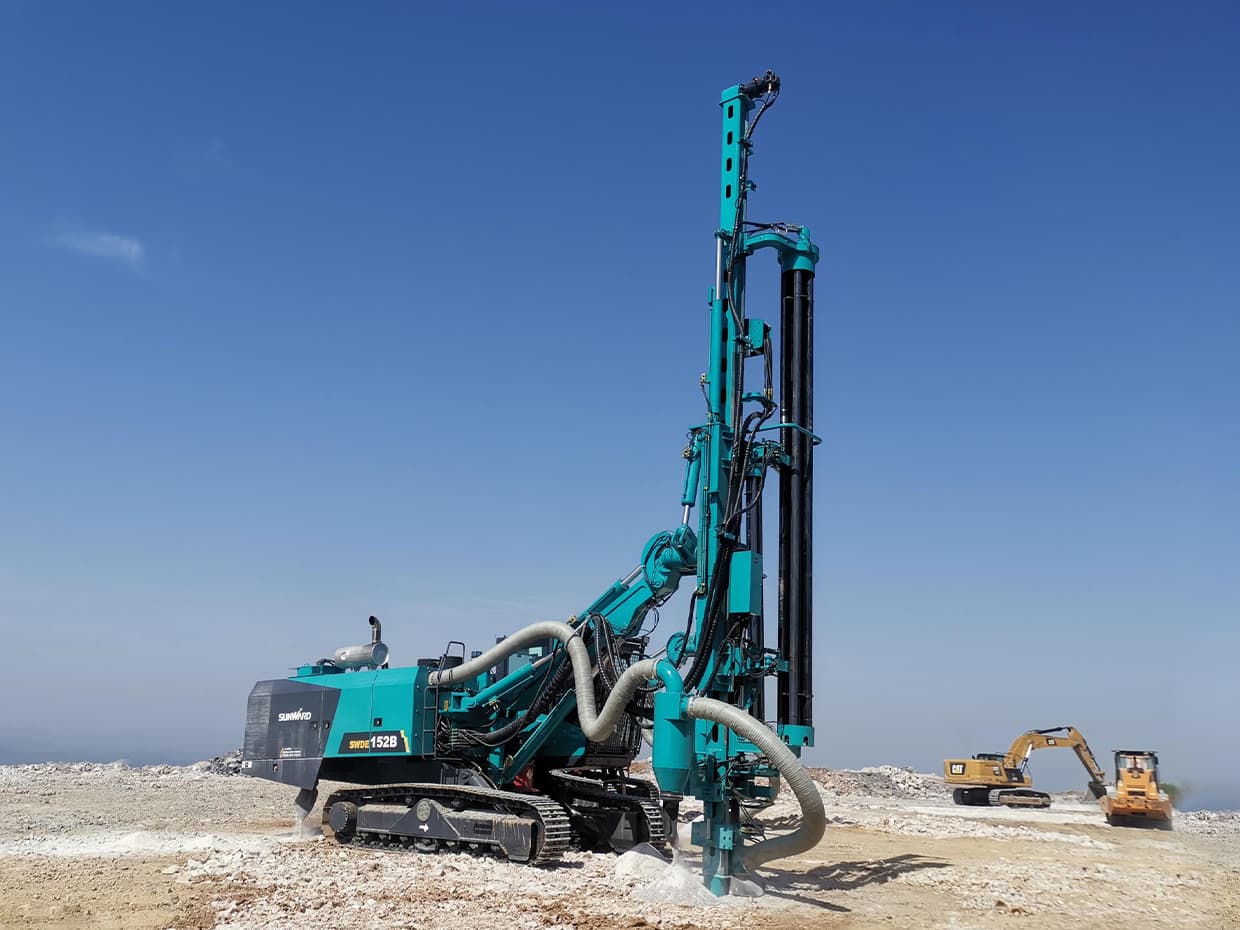
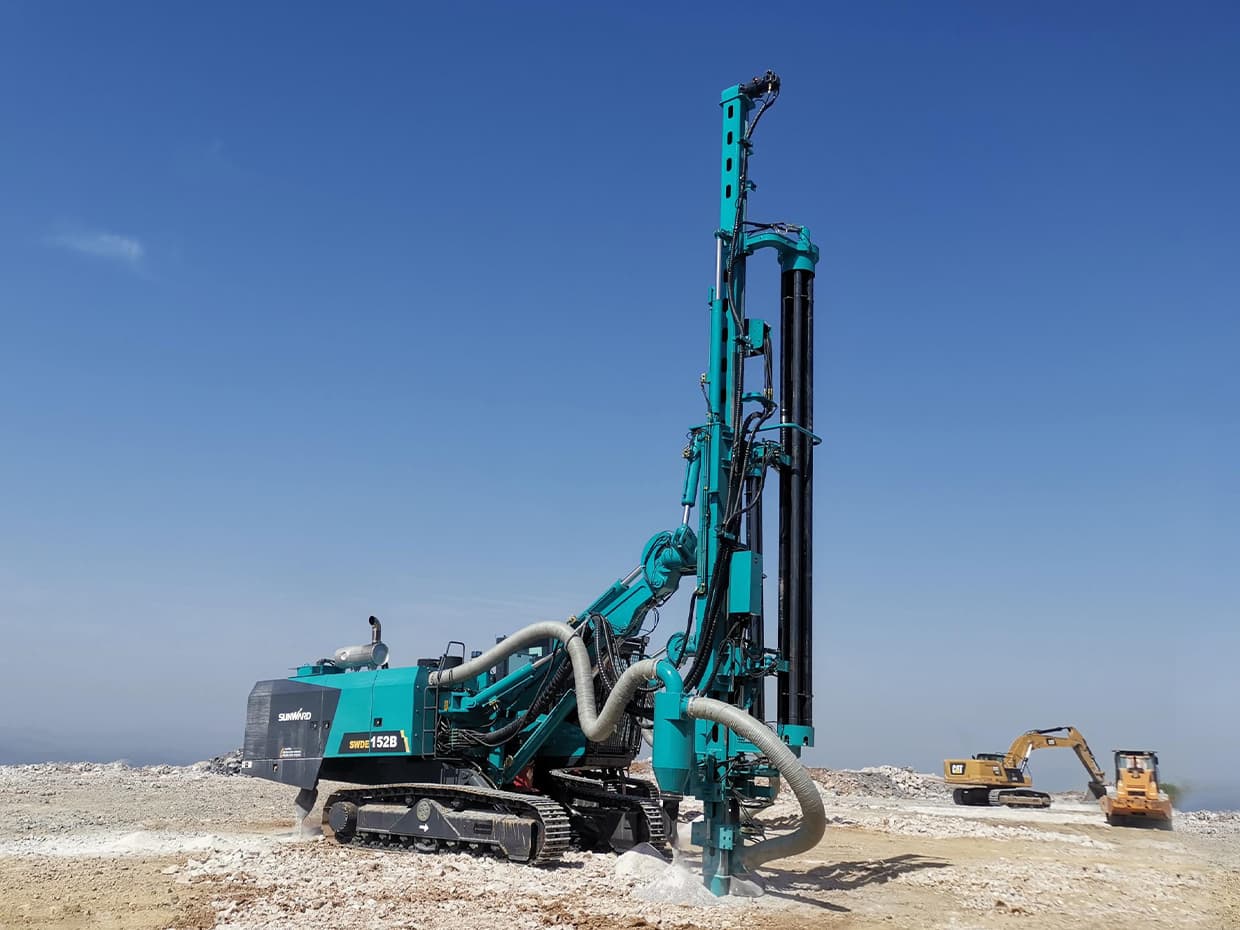
Current manufacturer material can be a useful starting point. For example, a page for the Sunward SWDE165B illustrates an integrated DTH drilling rig where the compressor, drill pipe and DTH hammer ranges are specified together. That makes it easy to see the intended hole range, but the page is a family boundary, not a guarantee. A used unit may have different components, hours, and wear, so treat the brochure as a reference, not as proof.
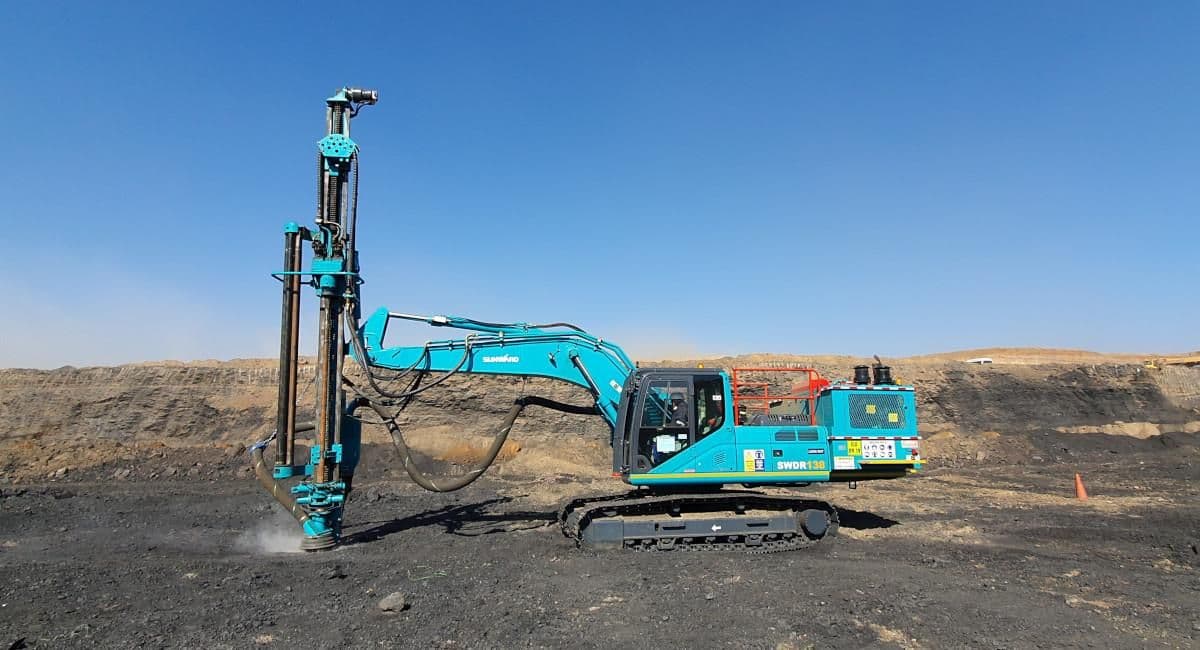
When you inspect an integrated machine, you are looking at one system: engine, compressor, cooling, rotary head, and dust collector all on the same carrier. The air passes internally, so you avoid the climate and hose problems that affect a separate setup. But that also means the compressor hours are the engine hours and drill hours are tied to the same unit. The risk is that one failure stops both drilling and air.