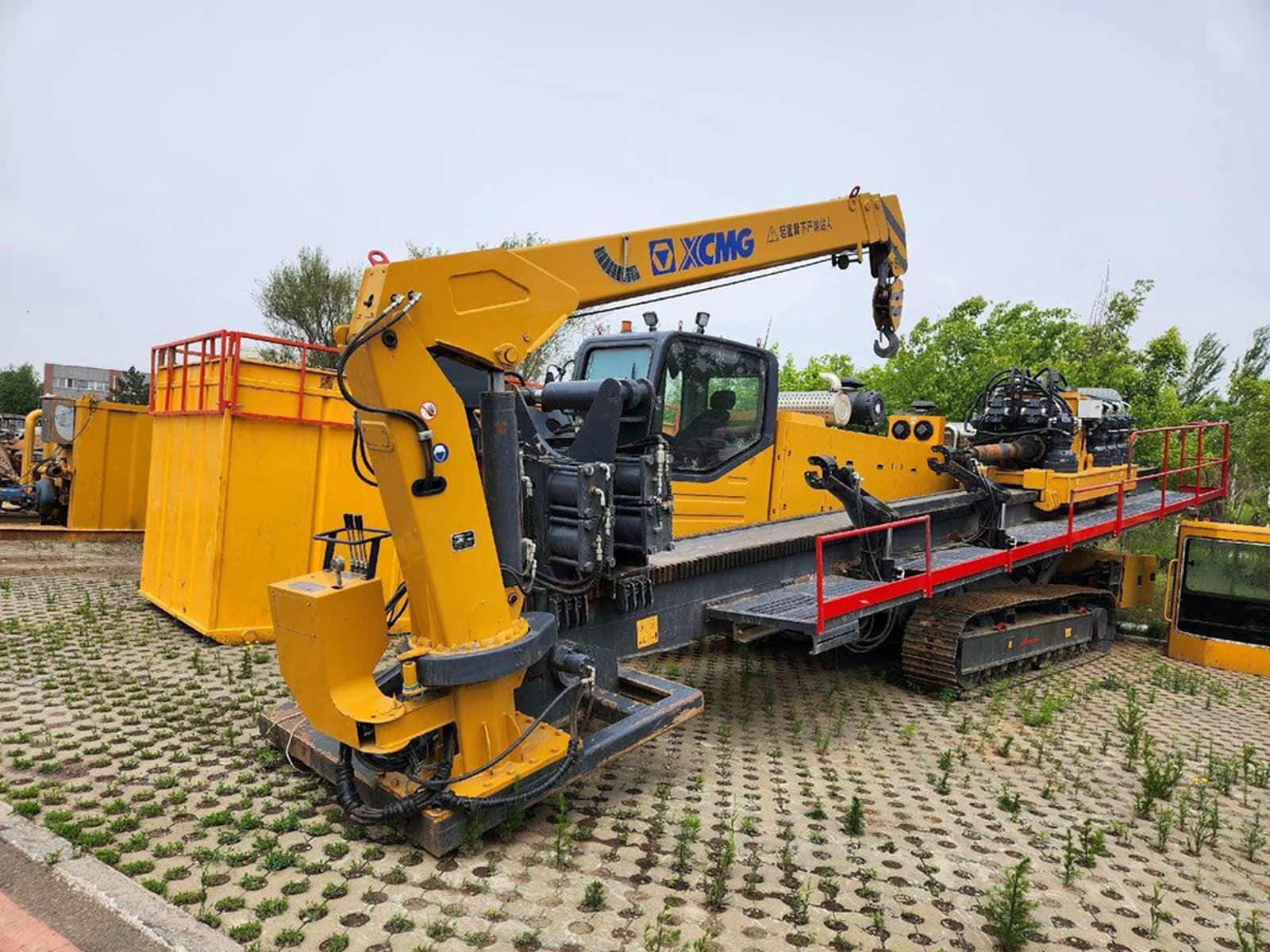
"How much is the 50-tonne XCMG?"
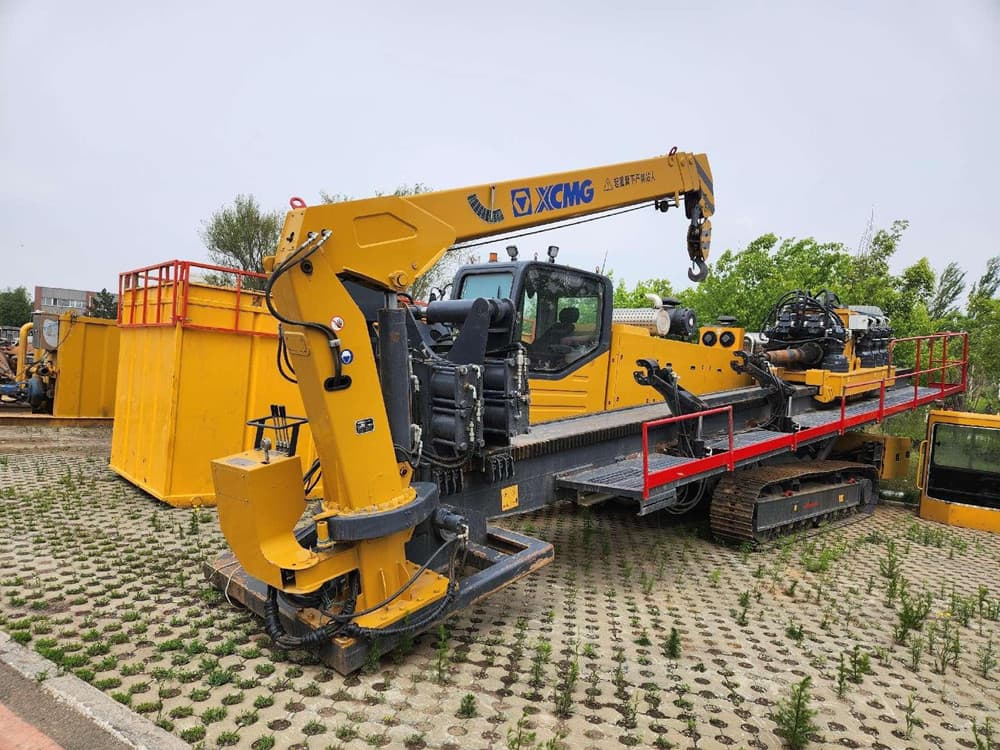
A buyer raised exactly this kind of question in the market materials. The seller discussed a XCMG 650-grade machine and stated that the price for a regular configuration could exceed RMB 800,000. We do not treat that figure as a benchmark for the used market; the record is incomplete, and its scope is limited to one seller's statement. We do take the question seriously, because buyers need to understand how large a machine their project can support.
Our answer starts with the crossing, not the tonnage label. Fifty tons sounds clear, but it does not tell us the bore length, product diameter, ground, profile, reaming plan, drill pipe, fluid system, or the resistance the final pullback may create. Buying an HDD rig on the label alone is why a cheap rig becomes the machine that watches another contractor complete your crossing.
Before discussing pullback force, first clarify the crossing project conditions
Please provide the guide length, entry and exit constraints, maximum depth, the product pipeline planned for installation, the finished bore diameter, and the known geological conditions. Please tell us about groundwater, cobbles, soft soil, rock, previous boreholes, and sensitive surface areas. If the information is still preliminary, please say so. We can handle uncertainty; but we cannot protect you from uncertainty that is withheld.
We also ask how you plan to steer, ream, mix and recycle the slurry, handle the drill pipe, and install the product pipeline in sections. The rig is the center of the operation, not the entire operation. A seller who only offers a crawler rig has not quoted the complete crossing project package.
- Pilot hole and total drilling length
- Product tube material, outer diameter and traction section
- Completed drill holes and planned reaming stage
- Geology, groundwater and known obstacles
- Entry/exit geometric dimensions, working space, and passageways
- Mud mixing, pumping, recovery, and water supply
Tonnage requires a margin, but a larger nameplate does not equal design
The rig needs to have sufficient thrust and pullback force to complete the planned work, with a reasonable margin for the actual formation and construction. We will not publish a so-called universal factor based on these listing materials. The designer's pullback assessment, product pipe, bore path, reaming method, and formation must determine the requirements. We then compare the equipment's documented capabilities and observed condition.
A larger stated tonnage may mean a higher purchase, transport, and operating burden. Too small a tonnage may leave the drill string or product in the ground. We would rather question an optimistic plan than sell you confidence. If no pull assessment exists, the responsible answer is to obtain one before locking in a machine class.
In addition to pullback, torque, rotation, and drill pipe configuration are also important
A seller praised the XCMG XZ430 for its high torque, high speed, and fast operation, then demonstrated slewing, pushing and pulling, and clamping. These are indeed the categories of functions that should be shown, but sales adjectives are not measured results. We need to confirm the specific machine and request readable specifications and a load test.
Rod diameter, length, quantity, and thread condition affect the commercial proposal. Shorter rods may help with work in tight urban jobsites; longer rods change how they are handled and transported. A XZ960E listing states that 80 and 102 are counted as 6 meter drill rods and include one reamer, one pilot drill bit, and drive components. We measure, count, and inspect these items rather than assuming the description is accurate.
Mud capacity may limit powerful drilling rigs
Soft soil strata, unstable formations, and large-diameter reaming stages make fluid management central. This kit's source also advertises pipe replacement and pipe pulling equipment for soft ground, claiming stable drilling and resistance to collapse. We retain this as a creator statement. Your HDD plan still requires the correct mixing, pumping, return flow, and disposal configuration.
Ask which mud pumps, mixers, and recycling equipment are included, and test each of them. Confirm connections, hoses, and consumables. A rig with excellent pullback force but insufficient fluid support can create the risk of getting stuck that you thought extra tonnage would solve.
Closed-loop hydraulic systems deserve a real diagnosis
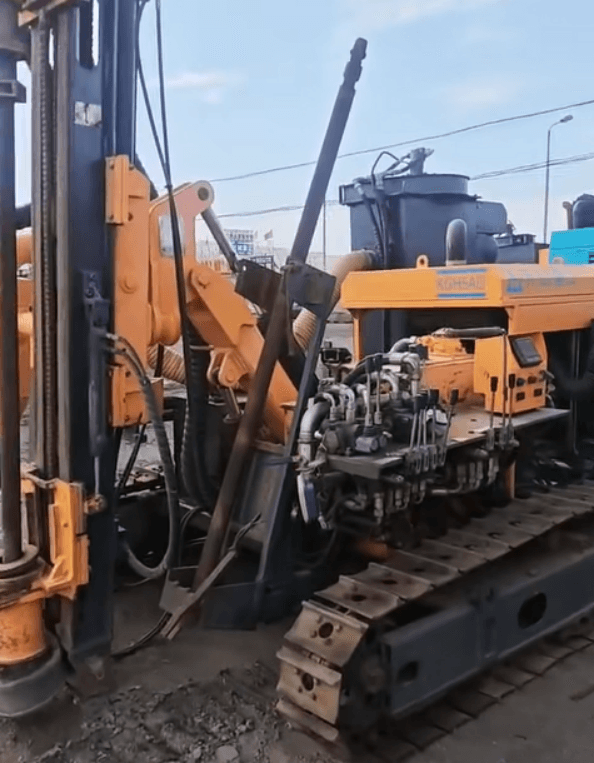
A maintenance video uses Dilong 60T to explain the issue of low forward and reverse rotation pressure. The video author describes checking the charge pressure at 1,500 rpm, with an expected value of approximately 2.4 MPa, and a difference of approximately 0.2 MPa during direction changes; below 2 MPa is described as a fault signal, followed by isolation testing to distinguish between pump and system issues. These values belong to that diagnostic example and do not apply to every HDD drill rig.
Lessons matter more than numbers: do not accept statements like "the swing feels weak" or "the pump is fine." Use the correct repair information and instruments for the exact model, record pressure and temperature, and isolate the cause. We require qualified technicians to test the thrust pull-back and swing circuits, rather than letting a fresh coat of paint answer a hydraulic question.
Test the drill pipe circulation, not just the engine
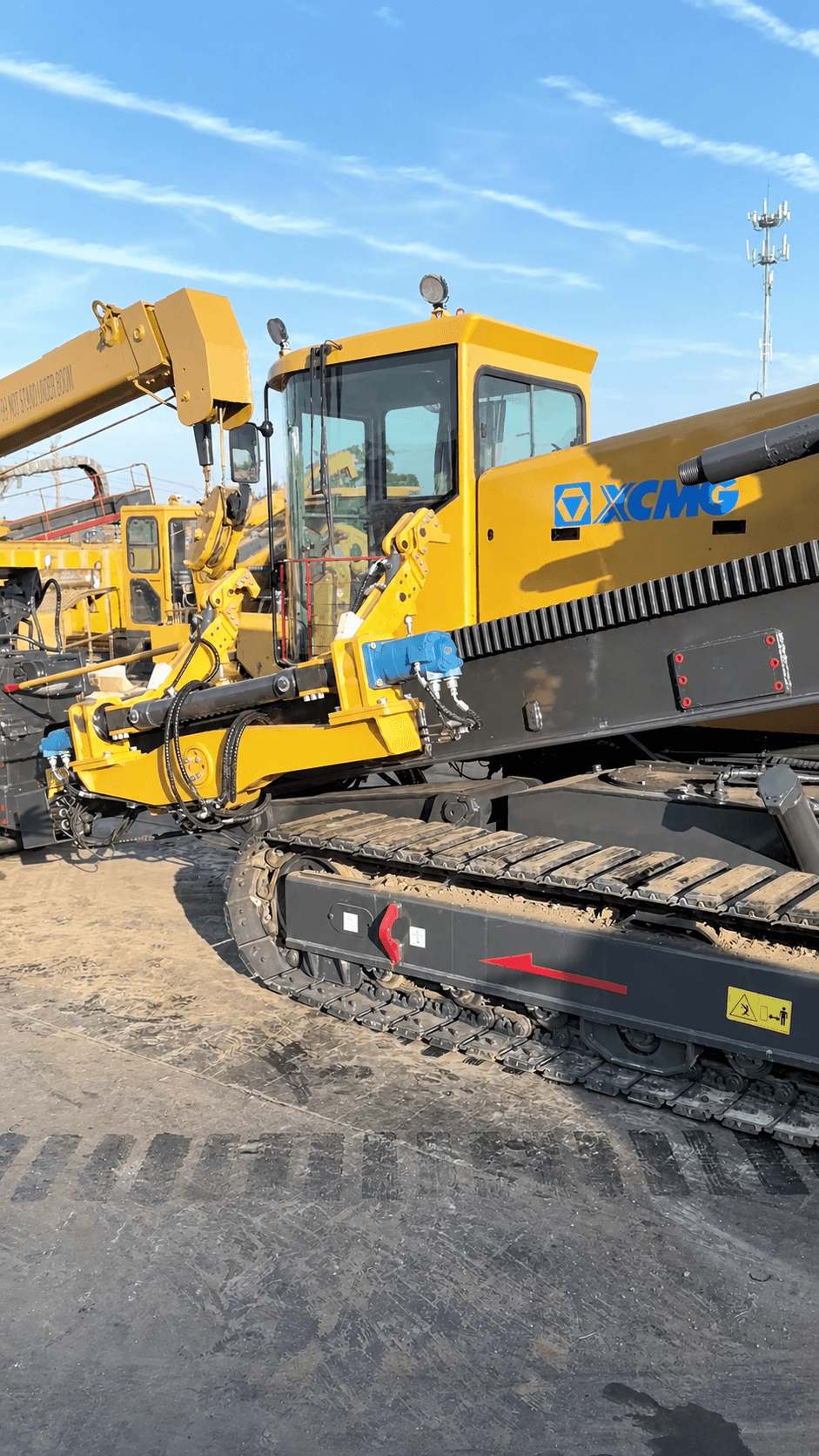
Our inspection on the day of the date begins with a cold machine, showing the whole machine, serial number, engine nameplate, and hour meter in one continuous shot. After startup, we observe the gauges, smoke, noise, and leaks. Close-up views are provided of the undercarriage, tracks, frame, racks, clamps, vise, carriage, anchoring devices, controls, and hose routing.
After warm-up, the seller demonstrates walking, positioning, anchoring, two-way swing, thrust and pullback, clamping and shackle release, and repeated rod handling. Where controlled testing is possible, we want to understand pressure and temperature behavior under effective resistance. A machine idling in the yard only proves it can idle in the yard. What we need is a work cycle that makes money.
The hours and paint finish must be consistent with the wear condition
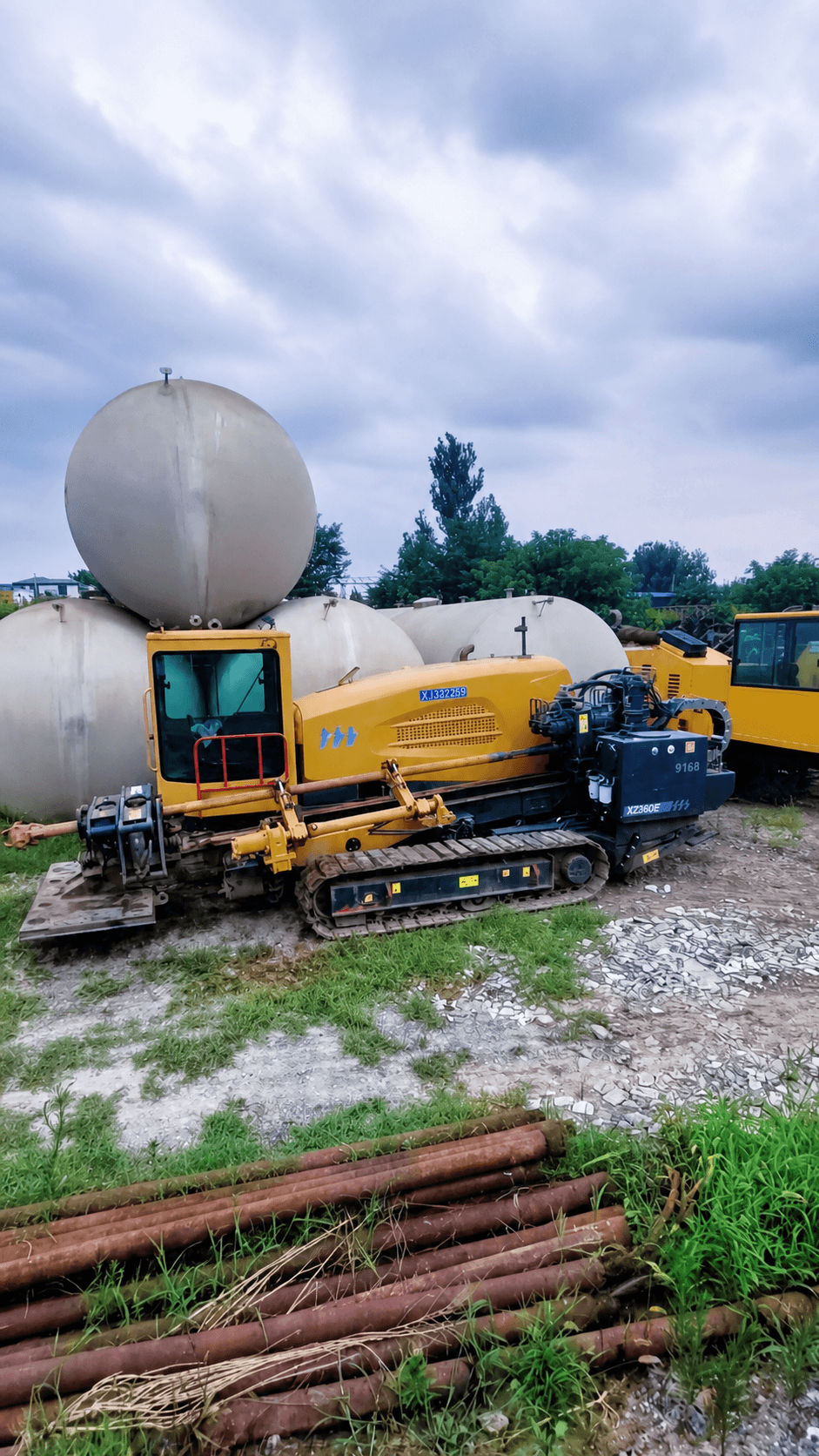
A genuine XZ960E equipment listing record describes a 2020 machine with 2,000 working hours. This may be accurate; the post alone cannot prove it. We compare the displayed data with control component wear, track gears, racks, clamp jaws, rod loader, pins, hoses, and maintenance records. The seller shows the machine together with its nameplate and gauges in the same continuous video.
A buyer asked whether a XZ430 has original paint. We understand the thinking, but paint is the cheapest part of the decision. Original paint can help reveal usage history; new paint can hide it. Neither tells you whether the pump, motor, gearbox, and drill pipe handling are healthy. We value hydraulic condition and reliable cycling, not shine.
Unless otherwise stated in the contract, the tools in the photos are not included
Reaming bits, guide heads, transmitters, housings, swivels, adapters, drill rods and mud equipment all affect both price and delivery readiness. The listing for XZ960E specifically mentions drill rods, reaming bits, guide drill bits and drive components. We will create a photographed inventory tied to the serial-numbered rig, recording condition, dimensions and quantities.
Electronic and positioning equipment needs to be compatible with your existing equipment fleet and local support. We do not assume that the items shown are in working order or will be delivered with the machine. If critical tools are not available locally, we will develop an initial spare parts and wear parts plan based on part numbers and lead times.
Break the HDD main unit and accessories into a verifiable checklist
Beyond the main unit, separately record the drill pipe specifications, length, quantity, and thread condition, the dimensions and quantity of the guide head, reamer, rotary joint, and connectors, as well as whether the locator, probe, mud pump, mixing and recovery equipment are included. For positioning equipment, the model, compatibility, and test status should also be verified. Accessories appearing in photos cannot automatically be regarded as included in the quote.
When comparing candidate machines, make each listing correspond to the same equipment number, and separate what is included, what is not included, and what needs to be configured separately. Record the main unit running test and positioning test separately from the mud system test; for tests not yet completed, list the items to be verified, so as to avoid mistaking the main unit's ability to run unloaded for the entire equipment set already meeting construction requirements.
Landed cost is higher than the rig quote
Only once the working conditions and scope are determined do prices become comparable. Market posts advertising 2021 and 2022 450 series drilling rigs, 960 equipment, larger machines, and trade-in services usually have no available figures. "Price negotiable" basically means no price is provided. We request a written quote for one exact machine.
We then add inspection, repair, tooling, export preparation, packing, freight, destination port charges, customs clearance, unloading and inland transport. The contract specifies FOB, CFR or CIF terms and two ports. The invoice, packing list, bill of lading and certificate of origin are handled according to destination requirements; cleaning, degassing or quarantine responsibilities are all stated in writing.
Filter used HDD drilling rigs by engineering conditions and inspection data
Before payment, we record the model, serial number, nominal year and hours, hydraulic test evidence, repair details, drill pipe, tools, fluid equipment, spare parts, and remedies if the materials do not match. We verify ownership information and identification as much as possible. On a first transaction, installment payments and recourse arrangements are prudent.
At GLOBMACH, we take your drilling plan into the used equipment yard. We compare equipment based on project fit, verify specific rigs through cold starts, warm hydraulic checks, and drill rod cycling, and explain where the budget goes. If the pullback level is uncertain, we point out which calculations or evidence are missing. If a cheaper rig falls short in margin, tooling, or support, we tell you before it becomes your problem.
A used HDD drilling rig should be in place as part of a credible transit plan, not as a string of tonnage figures on tracks. Please provide ground conditions, pipeline, stratigraphic section and destination port. We will separate seller claims from evidence, equipment price from landed operating cost, and effective profit from expensive showpiece capital.