The useful difference is air and hole range, not machine size
The current Epiroc D50 and D55 pages make this comparison unusually clear. Both families use down-the-hole drilling, list 4- and 5-inch hammers and a 45 m maximum hole depth. Their transport envelopes are also identical on the current pages: 11,350 mm long, 2,500 mm wide and 3,500 mm high. Current stated weights differ by only 200 kg: 22,300 kg for D50 and 22,500 kg for D55.
The separation appears in the drilling and air figures. The current D50 reference covers 90-130 mm holes with a 287 kW engine and 295 l/s free-air delivery. The D55 extends the upper hole boundary to 152 mm and lists 328 kW and 354 l/s. Epiroc notes that product variations apply, so these numbers describe current families; they do not certify an older Atlas Copco-badged unit.
The two used machines in this comparison
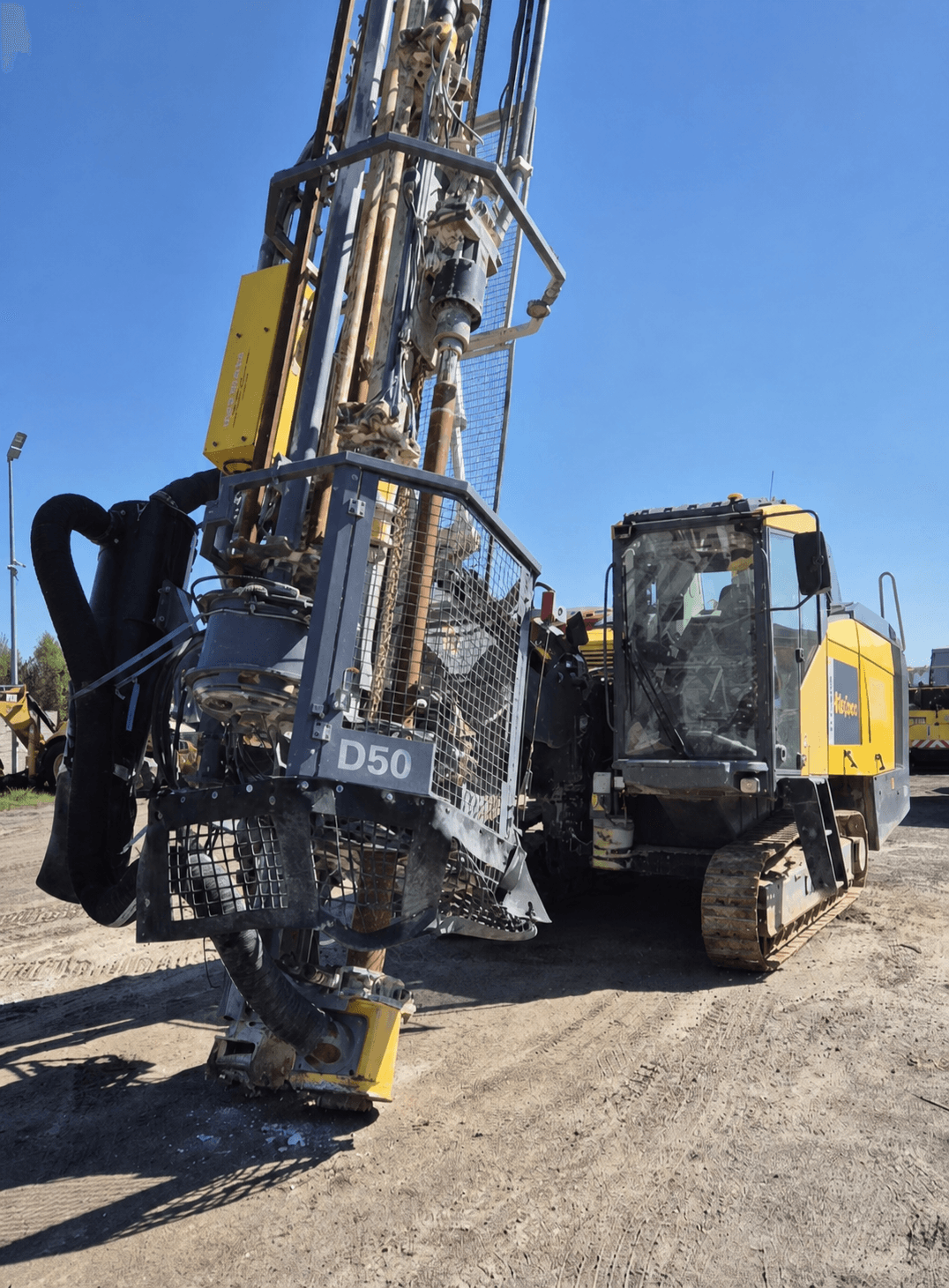
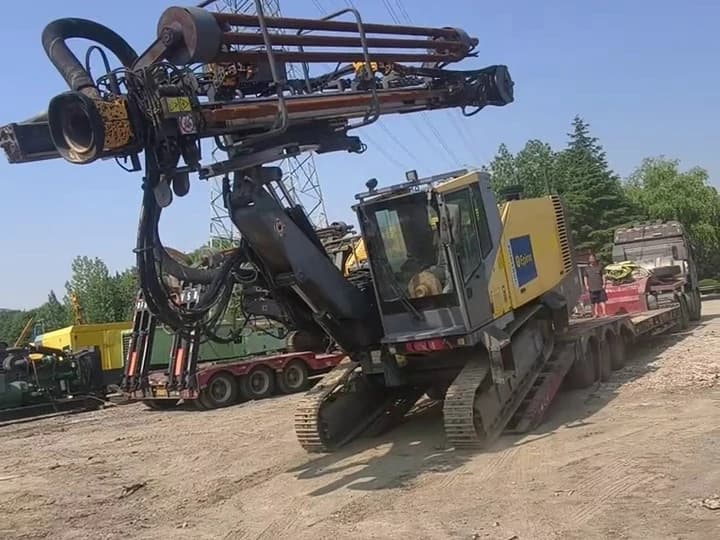
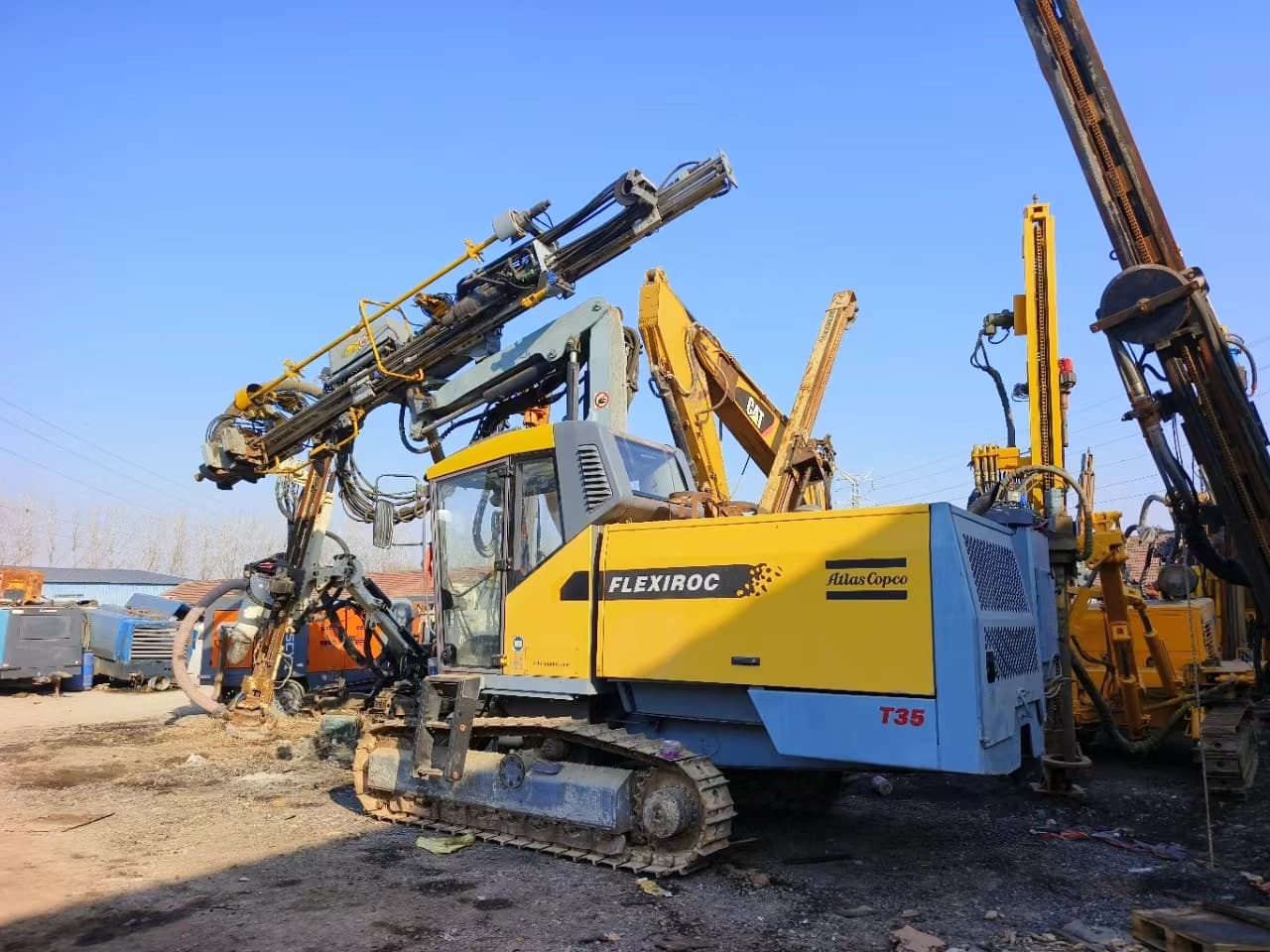
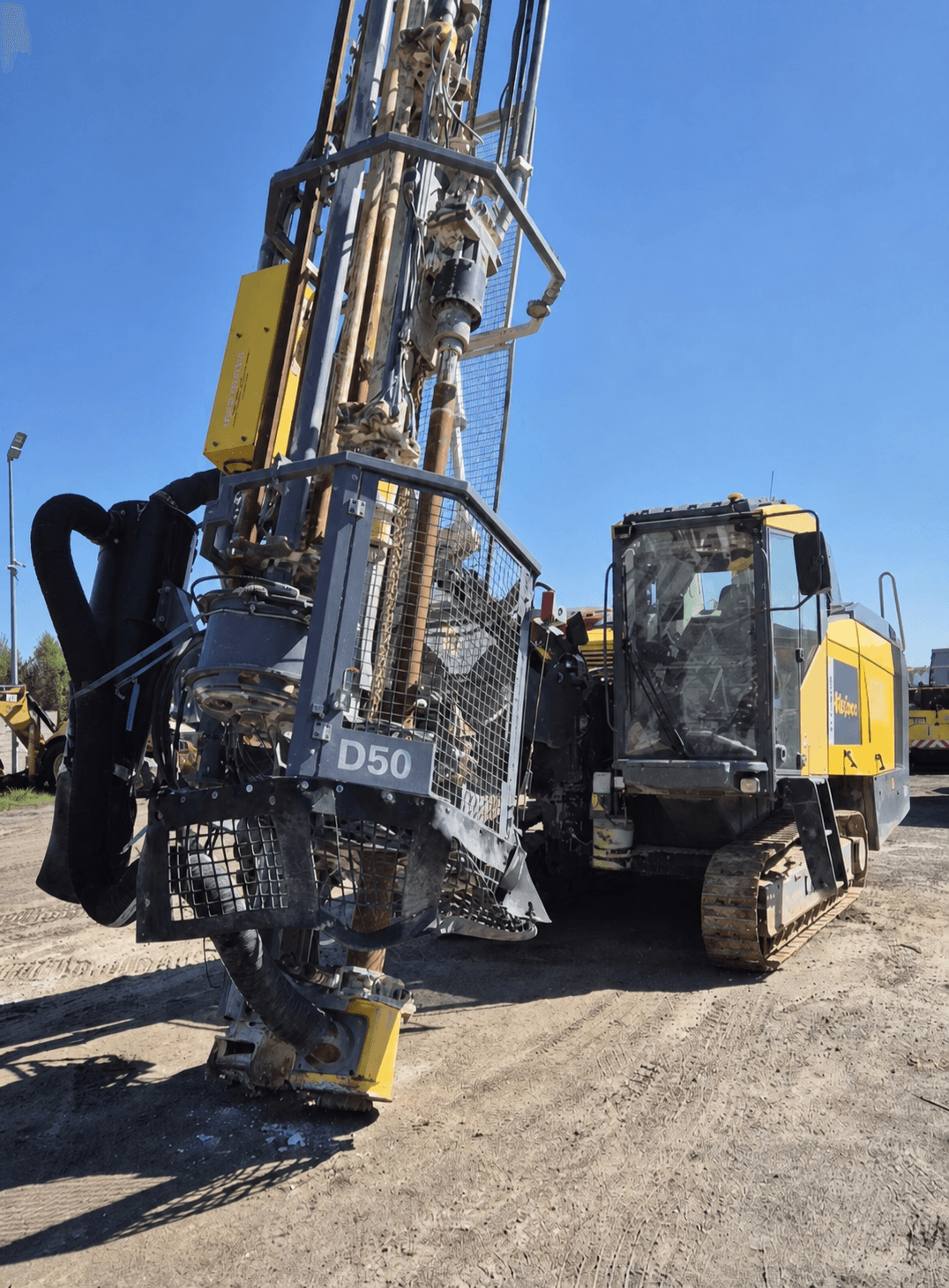
GLOBMACH's current candidates are Stock EB-F51D11F50E, a FlexiROC D50, and Stock EB-B8B5391C71, a D55. Their public pages establish the model identity and show the current machines. The installed compressor, rotary head, tube package, hammer, hours and loaded output are not yet published as verified structured facts.
That distinction prevents a common comparison error. The D55 family has the stronger current air reference, but EB-B8B5391C71 does not earn those figures merely because the badge says D55. Likewise, EB-F51D11F50E should not be rejected before its actual air package and condition are tested.