The slope does not care what model was cheap
Picture the machine at the bottom of your cut slope. The collar point is above it, the bench is narrow, the ground is uneven and the hole must enter at a controlled angle. Now ask the useful question: can this exact rig reach, stabilise, align and drill the required support hole? That tells us more than asking for the price of an '18-metre' or '25-metre' machine.
Buyers in the source material ask about 15, 18, 20, 22, 25 and 35-metre high-boom rigs, as well as conventional 150 anchor drills. The metre label is an invitation to investigate, not a complete working envelope. We need the vertical and horizontal collar locations, slope angle, bench width, hole angle, diameter, depth, casing or duplex requirement, rod length and support sequence. A boom that reaches the point but cannot hold a practical drilling attitude is not the right boom.
Slope protection, foundation-pit support, tunnel pipe roofing, anchors and anchor cables can demand different configurations. Some market posts pair the drill with casing, rods, booster pumps, grouting machines, mixers, stressing jacks and hoses. Others show only the main unit. We separate the drilling stage from grouting and stressing, then make sure you are buying the equipment you actually need. The cheapest main machine can become the most expensive incomplete system.
Choose the carrier and reach around access, not ambition
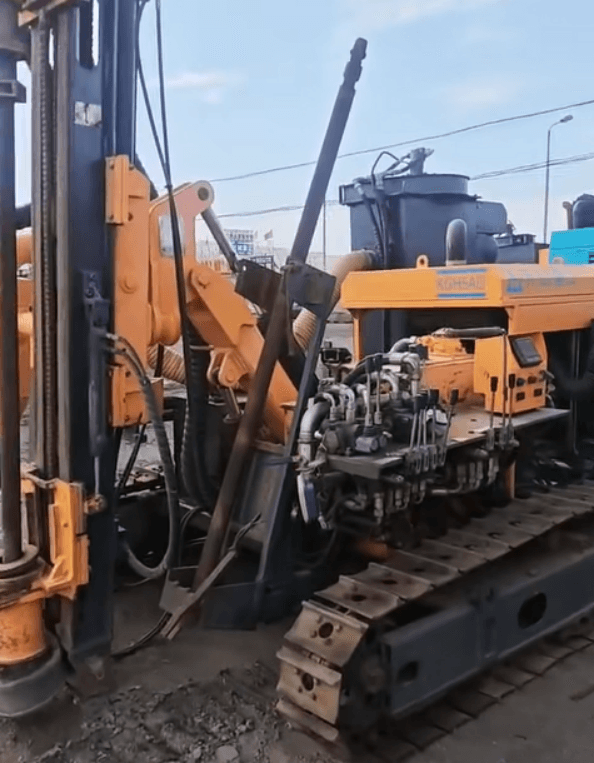
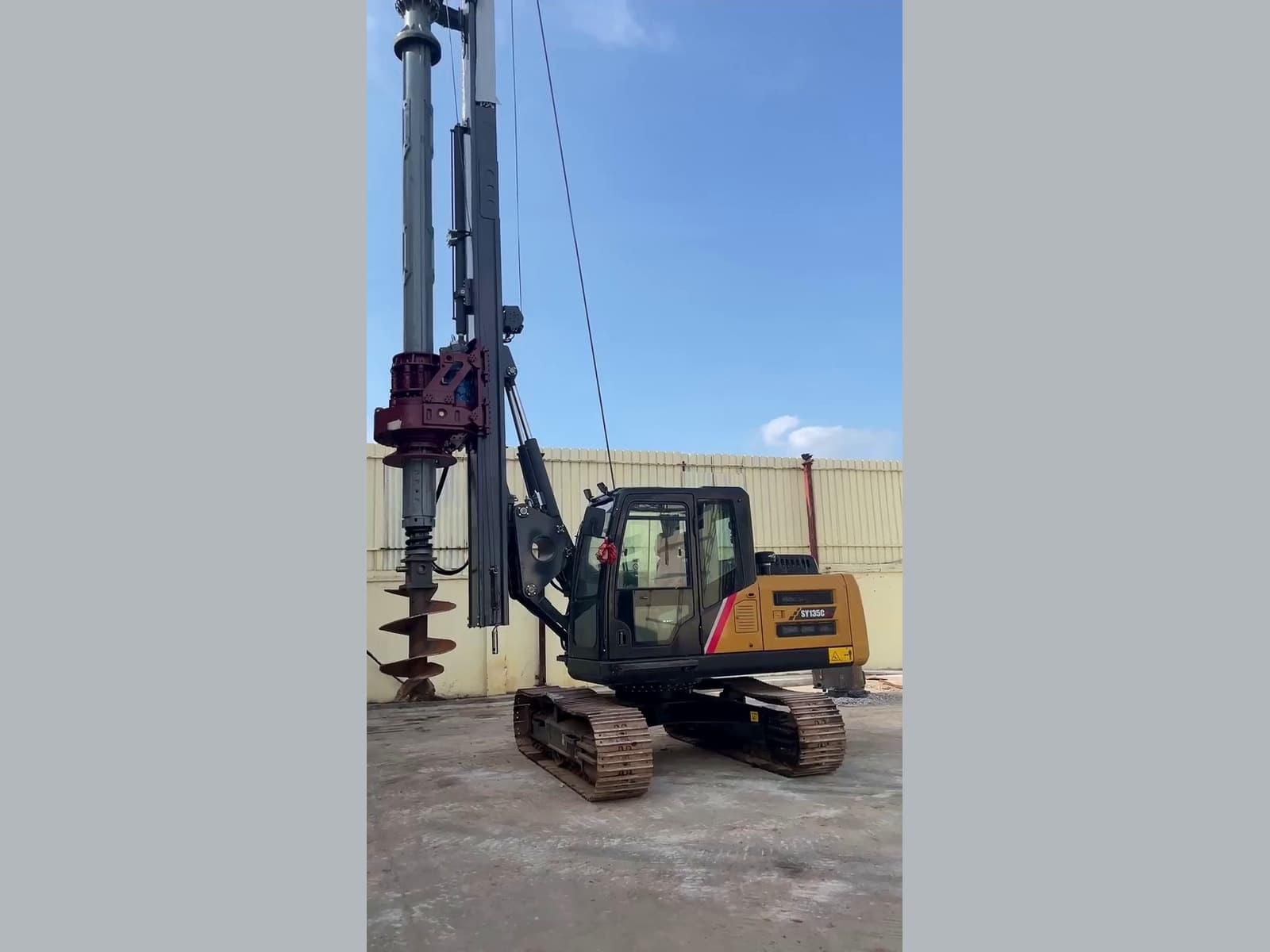
A ground anchor rig, a crawler high-boom machine and an excavator or crane conversion solve different access problems. High-boom machines are promoted for steep slopes and emergency road work because they can reduce dependence on high scaffolding. Conventional anchor rigs may suit a prepared bench or tunnel heading. Converted carriers can make use of equipment you already know, but the conversion quality, stability and controls become part of the inspection.
The market shows fleets of high-boom units advertised at 15, 20, 25, 30 and 35 metres. One seller said it held more than 30 machines and put returned units through detailed inspection. That availability does not tell us which height you need. Buying maximum reach for pride can add weight, transport burden and complexity while making tight sites harder. We want the shortest practical machine that safely covers your real collar positions with working margin.
We ask for site drawings, photographs, access gradients and the room available for outriggers or crawler positioning. Then the seller demonstrates boom raising, extension, swing, drill positioning and travel on the exact unit. We inspect boom pins, cylinders, hose routing, welds, slew and articulation points, structural repairs and the carrier undercarriage. A full reach demonstration on level concrete is still not the same as your slope, but it exposes far more than a folded machine in a yard.
For tunnel support, send the clear section, benching method, turning space, power availability and required drilling directions. For a slope, send the elevation difference and stand-off distance. If these dimensions are not firm, we do not write 'suitable' because a seller said so. We mark the gap and arrange a dimensional check or live positioning demonstration.
Make the rig prove drilling, handling and stability as one sequence
Our remote check starts with a cold engine and a current continuous video. The camera shows the full carrier, model and serial plate, engine plate, hours, undercarriage, boom, drill feed, power head, clamps and hose runs. Claimed low hours must agree with controls, pins, track wear, rod handling and the areas an operator touches every shift. Original paint proves paint history, not structural history.
After warm-up, we cycle every boom and drill function repeatedly, not once. We want crawler travel and steering, levelling, boom lift and extension, positioning at multiple angles, rotation, feed and retract, clamp and breakout, and real drilling with the rod and hole type proposed for you. We watch drift, play, jerky motion, temperature, leakage and whether hoses tighten or rub at full articulation. One operator video shows a high-boom rig being learned and moved; that is useful evidence of control layout, but it does not replace a loaded drill test.
We also test the support package. If the quote includes casing, rods, booster pump, grouting machine or mixer, each item gets an identity, quantity and condition line. A 2021 Anman 150D2 package was advertised at RMB 90,000 with a 150 grouting machine, mixer, stressing machine, jack, grout hose, roughly 80-100 metres of copper cable, 14 pieces of 146 casing, 11 pieces of 76 drill rod and a new 600 bit. That is one individual advertised package, not a market price. We would count, measure and test the actual contents before treating the scope as real.
Price the wear, the accessories and the next breakdown
'Nice price' is not a quote, and 'ready for site' is not a test result. One market post said four Anman units had arrived and seven 150 rigs were in the yard, with casing, rods and booster pumps in stock. Another seller talked about detailed refurbishment of returned high-boom units. We use those claims to ask better questions: which serial-numbered unit, which repairs, which parts were replaced, which accessories are included and who supports it after export?
Anchor drilling is hard on rods, bits, casing, clamps, guides, hoses and seals. We want a wear-parts list with part numbers and lead times, plus a starter stock matched to your planned work. If the seller says parts are easy to buy, he can identify the supplier and show current availability. A machine parked overseas because of one odd seal or control component is a very expensive way to save on the purchase price.
Fuel consumption is another common buyer question. We do not repeat a seller's daily money figure or create litres per hour from a model label. The useful approach is to run the exact rig through a defined drilling and boom-duty cycle, record the operating time and measurement method, and state the conditions. High-boom positioning, air drilling, hydraulic load and idle time all affect what the owner sees. If no measured result exists, we tell you the number still needs proof.
Repair history must be component-specific. We inspect the power head, feed, clamps, hydraulic pump and valves, engine or electric system, boom structure, cylinders, slew points, tracks and controls. Repaired equipment can work well; concealed repair is the problem. Paint is cheap. Structural alignment, hydraulic health and a supportable control system are where your money lives.
GLOBMACH checks whether the complete support job can leave China
Once the machine and scope are clear, we put them in the contract: serial number, stated year and hours, boom or mast dimensions, power configuration, disclosed repairs, rods, casing, tools, pumps, grouting equipment, test evidence and remedy for material mismatch. We verify ownership evidence and cross-check identifiers where possible. Split payment and a method with recourse can reduce first-deal exposure; promises in chat do not replace contract terms.
Export planning starts before loading. We confirm named loading and destination ports, FOB, CFR or CIF terms, packing method and machine dimensions in its shipping configuration. Cleaning, degassing or quarantine needs, port charges, customs, unloading and final delivery each get an owner. Invoice, packing list, bill of lading and certificate of origin are prepared to the destination plan. Long or high-boom equipment punishes late measurement, so we make the seller demonstrate folding and securing arrangements.
At GLOBMACH, we begin with your slope or tunnel, not a yard full of attractive machines. We translate collar positions, drilling method and support sequence into a practical configuration, inspect the used rig through its full motion and drilling cycle, and expose what the quote leaves out. You see whether money is going into useful reach, working accessories, repairs, spares or freight. If the machine cannot prove it fits the job, we would rather tell you to walk away than ship somebody else's maintenance problem to your site.