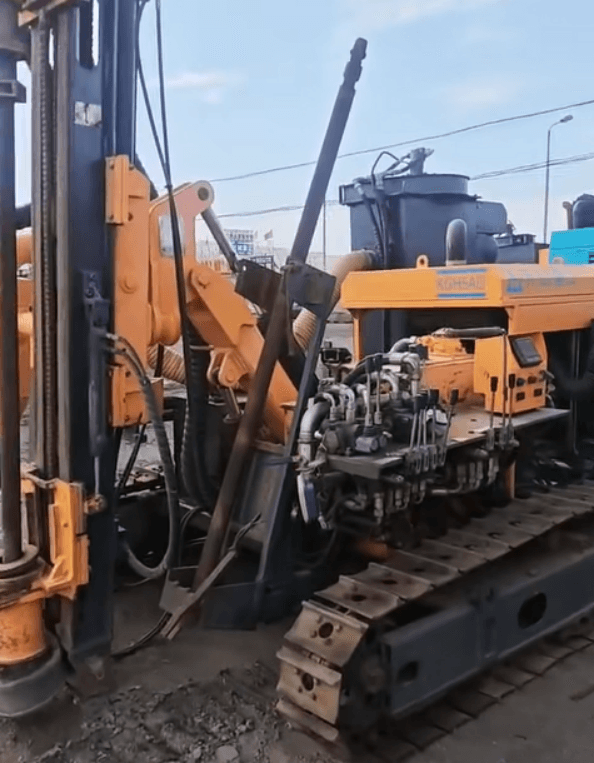
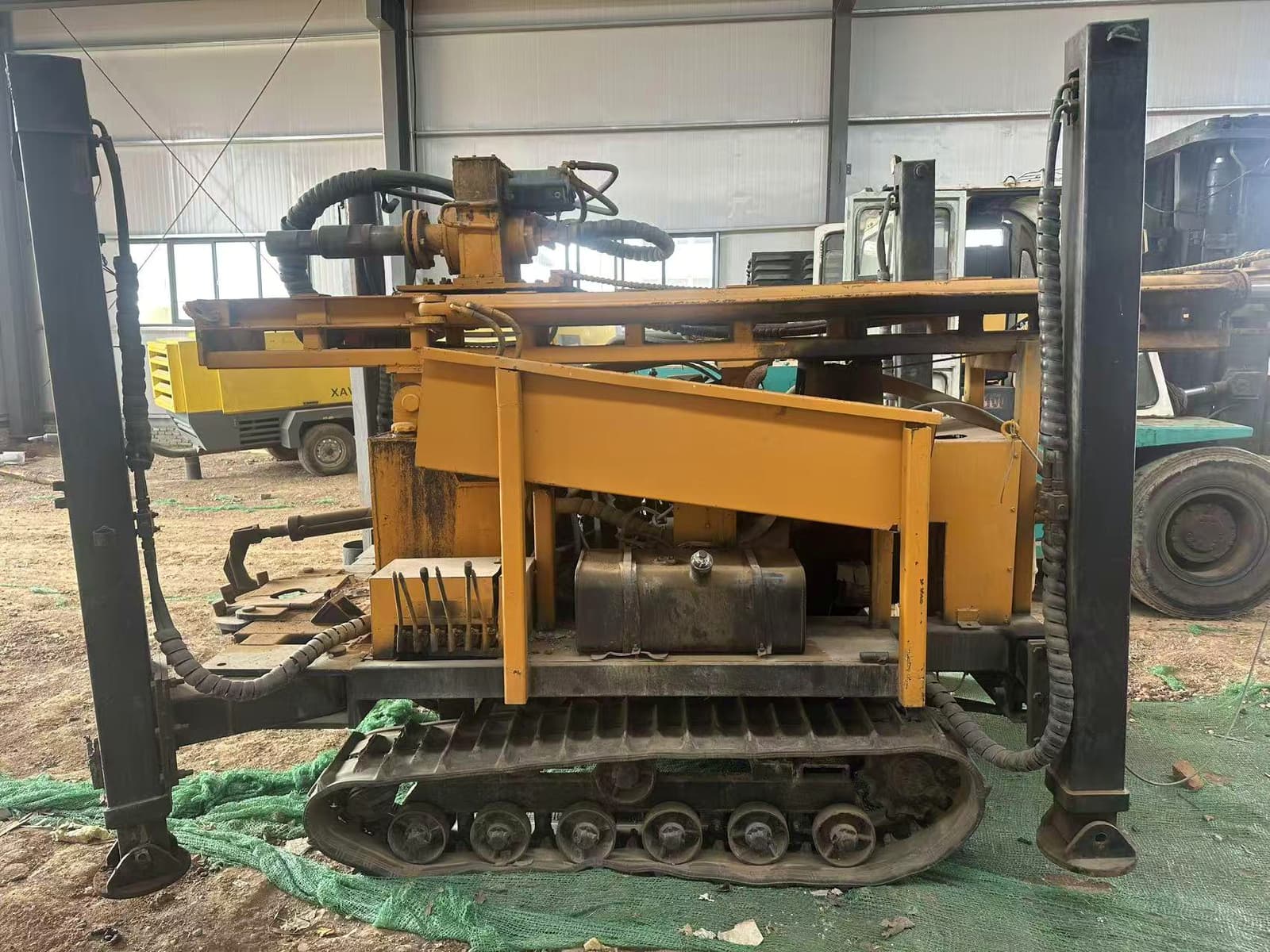
A tunnel rig has to fit before it can drill
The worst time to discover that a jumbo cannot turn, tram or cover the face is after it reaches the portal. Before we discuss brand or price, we ask for the excavation section, finished profile, heading method, bench arrangement, gradient, minimum clearance, turning areas and the route from unloading point to work face.
A seller in the source material says he selects jumbos by section size, rock hardness and budget. That is the right starting instinct. Add required hole directions, rod length, hole diameter, blast pattern or support pattern, utilities and shift plan. We then ask the seller to demonstrate that the exact machine can physically serve that geometry.
Face drilling, bolting and shaft work are not one shopping category
The package contains single- and double-boom drilling jumbos, bolting jumbos, small 360-degree tunnel drills, raise-bore equipment and shaft drilling rigs. They share underground labels but do different work. A used Xintong DWS31 bolting jumbo described for tunnel and mine support is not automatically a face-drilling replacement. A hydraulic shaft rig is another system again.
Tell us whether the machine must drill blast holes, bolts, pipe-roof holes, raise-bore pilots or shaft rounds. If more than one task is expected, list each one. We accept versatility only after the seller demonstrates the required position and tool configuration; a string of hashtags is not an engineering scope.
Map the boom envelope onto your real section
A small tunnel drill in the market was promoted for horizontal, vertical and inclined drilling with 360-degree rotation and a claimed 3-5 metre lifting height, with customisation available. Those are creator claims, not a coverage drawing. We ask for dimensions and a live reach demonstration, ideally against a marked wall that represents your section.
Watch the boom at the edges, not only straight ahead. We look for articulation play, cylinder drift, hose tension, interference, alignment and whether the feed can hold the drilling angle. On multi-boom machines, we also check boom-to-boom interference. If full coverage depends on repositioning, that belongs in the cycle-time and access discussion.
Diesel-electric or dual power must match the utilities at the face
One Xintong DWS31 listing described diesel-electric dual power and full-hydraulic control. That could be useful for tramming and working, but we verify how the exact machine uses each power source. Your available voltage, frequency, cable handling, connectors, grounding arrangement and local diesel specification must be compatible.
We do not assume an adapter solves everything. Ask the seller to show diesel starting and travel, electric connection, changeover, protective devices, motors and the complete cable arrangement. If a generator, transformer or cable reel is required but not included, the machine is not yet an operating package.
The rock drill is the expensive heartbeat
A 2025 Xintong single-boom jumbo listing at RMB 700,000 described eight months of service, an A18D/L hydraulic rock drill, double buffering, use with 4.7-metre rods and three months of technical after-sales service. That is one individual seller's offer, not a market value. The rock drill, rods, shanks, couplings and service promise all require verification.
We inspect the rock-drill identity, mounting, accumulator or buffering condition, leakage, lubrication, percussion, rotation and feed under load. We want service history and the local route for seals, shanks and other wear parts. A beautiful carrier with a tired rock drill is a costly shell.
Run every function cold, hot and repeatedly
Our current-date video starts with a genuinely cold engine, then shows machine, serial and engine plates and the hour display in one continuous sequence. We inspect the carrier, tyres, steering, brakes, articulation, outriggers, boom, feed and engine or electrical compartments before the machine warms.
After warm-up, we tram in both directions, steer, brake, level, position the boom across its range and cycle feed, rotation, percussion and rod handling. We repeat functions and inspect for leaks, heat, alarms and changing sounds. A warm idle in a yard proves almost nothing. We want drilling under load.
- Cold start and current continuous identity video
- Tramming, steering, braking and levelling
- Full boom and feed positioning through the required envelope
- Percussion, rotation, feed and rod handling under drilling load
- Hot recheck for leakage, alarms, temperature and function drift
Underground condition is more than engine hours
Hours matter, but water, dust, impacts, hose abrasion and repeated articulation leave their own history. We compare the meter with cab controls, pins, feed rails, hose protection, tyres, brakes, rock drill and repair areas. Fresh paint is cheap and can hide the visual story without improving the machine.
Ask for component-level repair records. The source market contains regular posts about jumbo repair, refurbishment and rock-drill parts. That means support exists in some Chinese markets; it does not prove support at your mine. We identify part numbers, manuals, software or diagnostic needs and technician availability before export.
Tyres and brakes deserve a loaded underground mindset even when the inspection happens on a flat yard. We record tyre condition, visible damage, steering response and braking behaviour in both directions. If the seller cannot create your gradient, he can still show service records and repeat controlled movements. We state what the test did not reproduce instead of calling the tramming system proven everywhere.
Dust, water and the rest of the heading still have to work together
One 2024 hydraulic shaft-drill post claimed wet drilling without dust and twice the efficiency of a pneumatic unit. We keep that as a seller claim, not a project guarantee. Water supply, flushing, drainage, ventilation and dust control must suit your site and the chosen drill. Demonstrate the relevant system on the exact machine.
The jumbo also joins a larger cycle: mucking, scaling, support, shotcrete and services. Confirm that its parked and working dimensions do not block other equipment and that its tramming speed and setup fit the sequence. A fast drilling claim is meaningless if the carrier cannot move efficiently through your operation.
Mobilization begins with measurements and ends with support
Before loading, we confirm shipping dimensions and weight from the exact unit, the way booms and feeds are lowered or removed, lifting and securing points, and reassembly needs. The seller demonstrates the transport configuration. At destination, the road, portal and underground route must accept the machine, not merely the ship.
Training matters. The material includes an operating tutorial for a Xintong DD42 and seller offers of maintenance and original parts. We request manuals, operator orientation and remote support in writing. If software, special gauges or proprietary tools are required, they travel with the plan rather than becoming a surprise underground.
We prepare commissioning as part of mobilisation: required oils and fuel, electrical checks, reassembled components, initial function test and the names of people responsible. A machine can survive sea freight and still arrive with loose connections, contamination or a flat battery. The handover should catch transport effects before the first production shift, when every delay is already expensive. A short, disciplined commissioning check is cheaper than troubleshooting during the first blast cycle.
We make the pre-entry decision visible to you
The contract records the serial-numbered machine, stated year and hours, rock drill, rods and accessories, power configuration, repairs, test evidence, training, spares and remedy for material mismatch. We check ownership evidence and favour split payment with recourse for a first deal. 'Ready to work' is replaced by observable actions and named responsibilities.
Then we name ports, FOB, CFR or CIF terms, packing, cleaning or quarantine needs, export documents, port charges, customs and inland delivery. Invoice, packing list, bill of lading and certificate of origin follow the destination requirements. The RMB 700,000 single-boom listing, for example, cannot be compared until all those inclusions and obligations are clear.
At GLOBMACH, we take your tunnel section and working cycle to the Chinese used market, shortlist machines that can realistically enter and cover it, and make sellers prove condition under load. We show where your money goes: rock drill, carrier, repairs, tools, spares, preparation and freight. If the geometry or support route does not close, we say so before the machine moves.